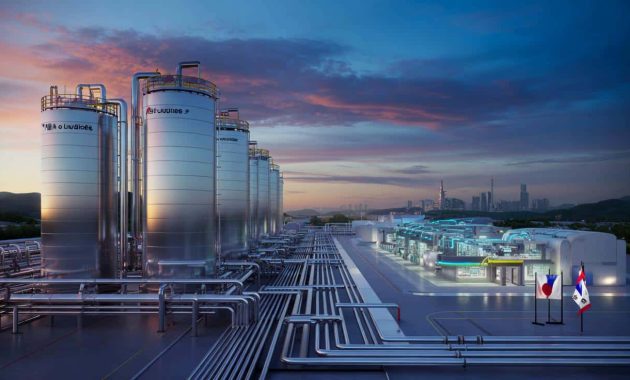
On the surface it looks like just another acquisition. In reality, France’s Air Liquide has just bought itself a central role in the Asian tech supply chain by taking control of DIG Airgas, a heavyweight in South Korea’s industrial gas sector, for around €2.85 billion.
A €2.85 billion bet on South Korea’s industrial backbone
On 13 January 2026, French group Air Liquide confirmed the completion of its acquisition of DIG Airgas for roughly €2.85 billion. The deal instantly propels the company to the front of the pack in South Korea’s gas market, a sector that quietly underpins everything from semiconductors to electric vehicles.
Air Liquide is not a newcomer to the peninsula. The group has been present in South Korea for more than three decades, supplying medical oxygen and electronics gases. Yet this takeover marks a step change: instead of operating on the margins of a few high-tech projects, the company now plugs directly into the country’s industrial circulation system.
DIG Airgas arrives with serious industrial weight:
- around 60 production sites spread across South Korea,
- some 220 kilometres of gas pipelines,
- about 550 employees,
- and 2024 revenue near €510 million.
With DIG Airgas, Air Liquide shifts from being a specialist supplier in South Korea to a structural player in its industrial infrastructure.
The newly acquired company also brings a portfolio of roughly twenty ongoing industrial projects. That pipeline of investments gives Air Liquide multi‑year visibility in a market where long-term contracts and reliability matter more than quick wins.
Industrial gases: the invisible pillar of advanced tech
Talk about semiconductors normally revolves around nanometres, fabs and subsidies. Very rarely does anyone mention the gases that allow those chips to exist at all.
Why ultra‑pure gases decide whether a chip lives or dies
A semiconductor wafer goes through dozens, sometimes hundreds, of processing steps. At each stage, specific gases manage etching, deposition, cleaning or protection. Any contamination can ruin the entire batch.
- Ultra‑pure nitrogen prevents unwanted oxidation and keeps a “clean room” environment stable.
- Hydrogen supports deposition processes and some cleaning stages.
- Rare gases such as argon, neon or krypton feed plasma etching and lithography tools.
A thin silicon wafer only a few tens of centimetres across can be worth several thousand euros once processed. One invisible particle or chemical impurity can turn it into scrap. Yield losses then cascade across the supply chain: fewer chips, higher costs, delayed shipments.
➡️ A polar vortex anomaly is approaching, and its intensity is almost unheard of in March
➡️ Psychology suggests that constantly prioritizing children’s happiness leads to selfish adults
➡️ Here’s the precise age when making new friends gets harder, according to researchers
➡️ Turning off Wi‑Fi at night, a quiet habit that improves sleep
In cutting‑edge fabs, gas purity levels often reach 99.9999% or higher. At that point, one part per billion can still matter.
DIG Airgas built its reputation precisely in this ultra‑demanding segment. Its network and know‑how in supplying ultra‑pure gases to local giants now become part of Air Liquide’s global portfolio. That includes the ability to monitor purity in real time and ensure uninterrupted flows to fabs that run 24/7.
Locking in the Asian electronics triangle
From Japan to Korea: closing the loop
With this acquisition, Air Liquide further consolidates a strategic triangle in East Asia built over several decades. The group already has a strong presence in:
- Japan, a pioneer in advanced materials and chip equipment,
- Taiwan, home to some of the most advanced semiconductor foundries,
- mainland China, where electronics and battery manufacturing continue to expand.
South Korea sits at the intersection of all these flows. It is the world’s fourth-largest industrial gas market, and the sixth-largest industrial economy overall. The country invests heavily in research and development, particularly in semiconductors, displays and electric vehicles.
Names like Samsung, SK Hynix, LG and Hyundai act almost like self‑contained ecosystems. Each relies on vast clusters of suppliers, including gas producers, to keep production lines running continuously. Interruptions are not tolerated: a stop in gas supply can shut down an entire fab, at a cost of millions of euros per hour.
Air Liquide, by becoming the leading industrial gas player in South Korea, places itself as a long‑term partner rather than a simple vendor. Supply contracts typically span years, sometimes more than a decade, and include large commitments to new plants and pipeline infrastructure.
Ultra‑pure gases: a niche no longer so small
A market that quietly reached tens of billions
Within a decade, ultra‑pure gases have shifted from niche speciality to strategic lever in the global economy. They are central to semiconductors, but also to photovoltaic cells, advanced displays and several emerging energy technologies.
According to recent industry estimates, the high-purity gas market was worth around €18 billion in 2024. Analysts expect it to reach roughly €18.8 billion in 2025 and around €28.8 billion by 2035. Forecasts vary, but most point to a value between €7.5 billion and €11 billion already by 2030 for the most critical ultra‑pure segments used in chips and low‑carbon technologies.
- On one side, chip miniaturisation pushes fabs to adopt ever‑finer lithography and more complex steps, increasing gas consumption and tightening purity requirements.
- On the other, the energy transition drives demand for high‑grade hydrogen for electrolysers and certain battery manufacturing steps.
Ultra‑pure gases used to be a technical detail. They now sit on the same strategic list as rare earths or battery metals.
Globally, two industrial groups dominate this field: Air Liquide and Germany‑based Linde. Both have invested heavily in purification processes, cryogenic logistics and large‑scale pipeline networks that can supply factories continuously over many kilometres.
Asia’s central role and Europe’s strategic anxiety
Asia currently produces more than 60% of the world’s ultra‑pure gases, with powerful hubs in Taiwan and South Korea. This concentration makes sense: the region also hosts most of the advanced chip manufacturing capacity.
For European and US policymakers, that geographic reality raises familiar questions about industrial dependency. While gas molecules are easier to ship than entire fabs, the most sensitive uses still favour local or regional suppliers connected by dedicated pipelines. Unexpected disruptions in Asia — from natural disasters to trade tensions — would quickly ripple across global electronics supply chains.
Deals like the DIG Airgas acquisition are partly about addressing that risk. By locking in production and infrastructure inside South Korea, Air Liquide strengthens supply security for its global client base, including chipmakers operating in Europe and North America who depend on stable Asian operations.
What this means for France, Korea and the chip race
France’s industrial diplomacy, gas edition
France has ambitious plans in semiconductors, but it cannot match the sheer scale of investment seen in Taiwan or South Korea. Instead, groups such as Air Liquide are carving out positions in critical segments of the value chain.
Supplying ultra‑pure gases may not sound as glamorous as building a new fab, yet it creates leverage. When a gas supplier is integrated into a customer’s pipeline network, storage tanks and process recipes, switching to another provider becomes complex and expensive. That level of integration gives France, through Air Liquide, a seat at the table in strategic discussions on capacity expansion and new fab locations.
| Actor | Main role | Strategic interest |
|---|---|---|
| Air Liquide | Ultra‑pure and industrial gas supplier | Secure long‑term contracts and regional networks |
| South Korean manufacturers | Semiconductors, batteries, EVs | Guarantee uninterrupted and ultra‑reliable gas supply |
| France | Investor nation via Air Liquide | Gain influence in the Asian tech supply chain |
For South Korea, the deal brings fresh capital while reinforcing the reliability of its industrial backbone. It also adds another global player with deep pockets ready to co‑invest in new plants alongside Korean conglomerates.
Key concepts and hidden risks behind ultra‑pure gases
Two expressions recur in this story: “ultra‑pure” and “pipeline network”. Both hide significant technical and financial challenges.
- Ultra‑pure: Purity is measured in “nines”. For instance, 99.999% purity is called “five nines”. Each extra nine represents a disproportionate increase in cost and technical complexity, from filtration and distillation to contamination control in storage and transport.
- Pipeline networks: Laying 220 kilometres of gas pipelines, as DIG Airgas has done, means securing rights of way, monitoring leaks, and installing redundancy so that maintenance never stops production at customer sites.
The risks are not limited to supply disruption. Long‑distance gas networks also raise safety and environmental concerns: leaks of hydrogen or other gases can cause explosions or contribute, indirectly, to emissions if production is not decarbonised. Firms like Air Liquide now face pressure to align industrial growth with climate commitments, for example by using renewable electricity for gas separation and electrolysis.
For tech and energy companies planning their next decade, the scenario is becoming clear. Building a new fab or gigafactory will not only hinge on subsidies and skilled labour. Access to ultra‑pure gases — their price, their carbon footprint, and the resilience of their supply — will increasingly factor into location choices. Regions able to combine strong local gas infrastructure with supportive policy may end up attracting more of the high‑value manufacturing everyone is chasing.
Originally posted 2026-03-08 11:02:05.