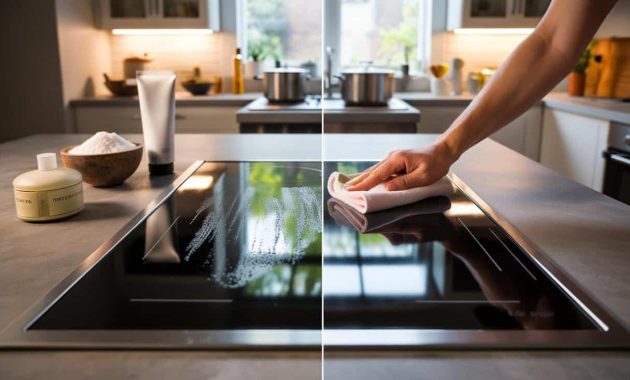
For many modern kitchens, that shiny black or white glass cooktop is the visual centrepiece, so even a hairline mark can feel like a disaster. Yet for most households, those scratches are far more about looks than safety, and with the right products and a bit of patience, the surface can often be revived without the cost of a new top.
Why glass cooktops scratch more easily than you think
Manufacturers sell glass and ceramic hobs as tough, heat-resistant and family-proof. They are all of that, but they are still glass. While they tolerate extreme temperatures and heavy pots, they do not love friction or grit.
Minor damage usually comes from everyday habits. A pan gets dragged instead of lifted. A few sugar crystals are left after a spill. A cast-iron skillet with a rough base shifts half an inch while you stir. None of this feels dramatic in the moment, yet it can leave faint, cloudy trails that only appear clearly under bright light.
Most marks on glass cooktops are cosmetic, not structural, and can be reduced dramatically with careful polishing.
That distinction matters. A scratched hob can be embarrassing. A cracked one can be dangerous. Learning the difference helps you decide what you can tackle at home and when to call in a professional.
How to judge if a scratch can be fixed at home
Before reaching for the cleaning cupboard, you need a quick assessment. This is less technical than it sounds.
The fingernail test
Start with strong lighting. Use your phone torch or open the blinds and angle your head so light rakes across the glass.
- Hazy film or hairline marks: You see a dull patch or very fine lines, but your fingertip feels almost smooth.
- Visible line, slight catch: Your nail snags a little when you run it across the mark.
- Deep groove or crack: Your nail drops into the line distinctly, and the mark may change under different heating cycles.
That last category is where you stop. Deep gouges and anything that looks like a crack should be checked by a technician. Heat and stress can cause them to spread, and no cream or homemade paste will fix weakened glass.
If your fingernail barely catches or not at all, you are usually in “cosmetic scratch” territory, where home repair is realistic.
➡️ Met Office issues 3-month winter warning – here’s what’s coming
➡️ “Use was only free until 2025”: Samsung quietly drops AI end date – here’s what that really means
➡️ Wood heating: when pellets give way to pallets
➡️ This oven-baked chicken stays juicy and flavorful without constant attention
➡️ Goodbye, Christmas tree : meet the plant hitting florists that’s set to trend in
Choosing tools that polish, not punish, the surface
Once you are confident the damage is superficial, the next step is picking the right products. The goal is controlled polishing, not aggressive sanding.
Clean before you polish
Any grit left on the glass can create fresh damage while you work. Let the hob cool completely, then use a cleaner designed for glass cooktops or a mild, non-ammonia kitchen spray and a soft cloth. Remove every trace of grease, crumbs and burnt-on residue you can safely lift.
Products that are generally considered safe
| Product | Best for | Notes |
|---|---|---|
| Baking soda paste | Very light haze and micro-scratches | Cheap, gentle, needs several rounds |
| Non-gel white toothpaste | Fine but visible lines | Contains mild abrasives, easy to control |
| Ceramic cooktop cream | Ongoing care and moderate scuffing | Formulated for hobs, leaves a shine |
| Glass polishing compound | Stubborn marks and older hobs | Stronger; follow instructions carefully |
On the “avoid” list sit steel wool, scouring powders, melamine foam used aggressively, and any tool that feels rough between your fingers. They may remove one scratch while creating a constellation of fresh ones around it.
Step-by-step methods to soften the look of scratches
For light haze and barely-there lines
Mix a spoonful of baking soda with a few drops of water to create a thick paste. Apply it to the scratched area with a soft, damp cloth.
Use small, circular motions and light pressure, staying within the scratched zone rather than wandering all over the hob. Work for 30–60 seconds, then wipe clean with a fresh cloth and inspect the area from different angles.
If the mark is fading but still visible, repeat once or twice. The effect is gradual because you are microscopically smoothing the glass, not stripping it.
For clear but shallow scratches
Non-gel white toothpaste behaves much like a gentle polishing paste. Place a pea-sized dab on the scratch, spread it thinly, then massage using a microfiber cloth.
Repeated short sessions usually work better than a single, aggressive scrub when dealing with glass surfaces.
Rinse and dry fully between rounds so you can judge progress realistically. Some households alternate toothpaste and cooktop cream over several sessions, slowly blending a stubborn line into the background shine.
Using specialist glass or cooktop polish
For deeper cosmetic marks that still pass the fingernail test, specialist products give you more cutting power but also more risk if you rush. Read the instructions closely, especially any warnings about how long to leave the product on the surface.
Apply sparingly, polish with steady, even movements, and stop if you notice any dull halo forming around the scratch. That halo means you are affecting the surrounding gloss and should switch to a gentler product to finish.
Restoring an even sheen across the hob
Once you are happy the scratch is reduced as far as it will go, give the whole glass top a thorough clean with a standard cooktop cleaner. This removes residue from pastes and restores a uniform look, which does a lot to hide any remaining line.
A final buff with a dry microfiber cloth can make the difference between “you can see it from across the room” and “you only notice when you know exactly where to look.” Many owners find that, after polishing and a week of normal use, the once-annoying scratch fades into the background of everyday cooking splatters and steam marks.
Habits that quietly protect your glass cooktop
Once you have spent half an hour nursing a scratch back into submission, your cooking habits tend to change. Small shifts in routine reduce the risk of new marks forming.
- Lift pans instead of sliding them, especially cast iron and stoneware.
- Wipe the base of pots before placing them on the hob.
- Deal with sugary spills, salt and sauce splatters once the surface is cool.
- Avoid using the cooktop as a spare worktop or chopping area.
- If you use a cover or mat, check that it is labelled as heat-safe for glass hobs.
These habits sound basic, yet they address the main causes of cosmetic wear: grit, impact and dragging.
When that scratch is a warning sign, not just an eyesore
There are times when persistence with polish is the wrong choice. If a mark branches like a tiny lightning bolt, runs right to the edge of the glass, or seems to widen after cooking, the surface could be compromised.
Any damage that looks or behaves like a crack deserves professional attention, especially on induction and high-output electric hobs.
Appliance engineers can check the glass strength, look for impact points and advise whether the top can be replaced separately from the whole cooker. While that can be a significant cost, it is still cheaper than a new appliance and far safer than cooking on glass that might fail under heat.
Extra context: what “scratch removal” really means
When people talk about removing scratches from glass, they are usually talking about masking and smoothing. On a microscopic level, you are levelling the edges of the scratch so light reflects more evenly, making it harder to spot. The groove rarely vanishes entirely; it just stops catching your eye.
This is why expectations matter. A seven-year-old induction hob with a scattering of marks can look vastly better after a weekend of careful polishing, yet it will never resemble a showroom model again. The aim is “nearly new” from a normal viewing distance, not laboratory perfection.
For households on tight budgets, that distinction is powerful. Instead of writing off an appliance at the first sign of wear, careful scratch reduction can extend its life by several years. Combined with gentler cooking habits, a glass cooktop can move from feeling fragile and high-maintenance to something robust enough for busy, everyday use.
Originally posted 2026-03-07 14:39:22.