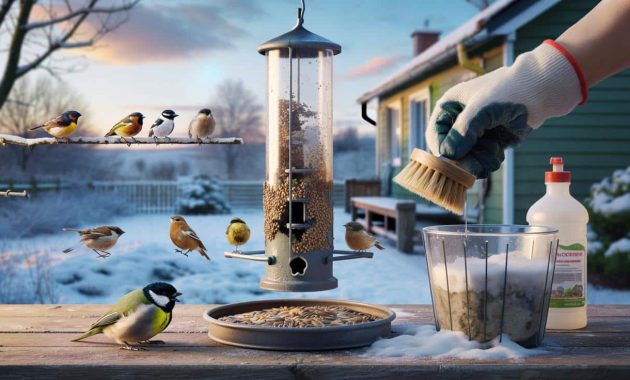
Across Europe and North America, millions of people scatter food in gardens and on balconies, proud to be helping robins, tits and finches survive the cold. Yet away from the charming scene at the feeder, another, less visible reality is at work: those same good intentions can quietly trigger deadly outbreaks of disease. The problem often lies not in what we put out, but in what we fail to clean.
When your garden’s five-star bird buffet turns into a health hazard
Feeding birds in winter changes their behaviour in a very human way. In the wild, food is scattered and birds must keep moving, covering distance and shifting from tree to tree. That constant movement limits long, close contact between individuals.
A feeder flips that pattern on its head. Suddenly, the food is concentrated in one spot. Dozens of birds, sometimes from several species, gather shoulder-to-shoulder around the same perches, trays and seed ports.
By concentrating food in one place, we also concentrate droppings, saliva and pathogens on the exact surfaces birds touch with their beaks.
What feels like a kindness can, if hygiene is neglected, resemble a crowded restaurant where the table is never wiped down. Birds land, eat, defecate and leave. Others arrive, place their beaks where the last visitor stood, and carry whatever is there back to their bodies and flocks.
Moist seed, droppings and mould: a toxic winter mix
Cold weather brings another problem: moisture. Rain, sleet and snow drip into open trays and the lower parts of seed hoppers. Uneaten food gathers at the bottom, gets damp and slowly breaks down.
Mixed with bird droppings, seed husks and dust, this decaying layer forms a foul sludge. Within that sticky mass, fungi and bacteria thrive. One fungus often mentioned by bird groups, Aspergillus, can cause serious respiratory infections when birds inhale its spores from mouldy food or dirty feeders.
What looks like “a few old seeds” can in fact be a thriving culture medium for fungi, bacteria and parasites.
This risk does not only concern delicate, rare birds. Common garden species such as greenfinches, goldfinches and sparrows are among the first to pay the price when pathogens take advantage of neglected equipment.
➡️ Wood heating: when pellets give way to pallets
➡️ Buying a spa at 70, “water above 104°F increases health risks” experts warn
➡️ A study links gut microbiome with autism, anorexia and ADHD
➡️ Hair professionals say this cut works well for women in their late 30s with busy routines
➡️ Nivea: I applied the blue cream on half my face every night for a week – here’s what happened
➡️ The 6 things you feel when you’re letting your life pass you by, according to psychologists
Invisible killers: salmonella and trichomonas at the feeder
Veterinary labs and wildlife rescue centres across Europe regularly report spikes in two particular diseases linked with dirty feeding stations: salmonellosis and trichomoniasis (often shortened to trichomonas infection).
These conditions are not inevitable. Many outbreaks are closely tied to overcrowded, poorly maintained feeding areas – the avian equivalent of leaving food and crockery unwashed in a warm kitchen for weeks.
Spotting sick birds: puffed-up feathers and strange behaviour
Winter birds fluff their feathers to keep warm, so spotting illness can be tricky. Still, there are warning signs that should catch your attention.
- Birds that stay unusually still on the feeder or ground, even when you approach
- Very puffed-up, dirty-looking plumage combined with lack of alertness
- Eyes half-closed, slow reactions, little effort to flee
- Struggling to swallow seeds, drooling or repeatedly spitting food out
Such symptoms can indicate salmonellosis, caused by Salmonella bacteria, or trichomoniasis, a parasitic infection that clogs the throat. Greenfinches and chaffinches are particularly affected by the latter in many European countries.
If a bird is sitting hunched at your feeder, eyes almost shut and reluctant to fly, your “safe haven” may already be a hotspot of infection.
From one bird to a whole flock in days
At a busy feeder, disease can move astonishingly fast. Trichomonas parasites, for instance, spread through saliva and contaminated food. An infected bird that regurgitates seeds back into a tray can effectively sow the pathogen onto every morsel present.
Other birds then eat those seeds, carry the parasite with them, and share it with their own groups at roosting sites or other gardens. Within a week or two, an apparently local problem can affect an entire neighbourhood population of finches or sparrows.
A single sick visitor at your feeder can trigger a quiet chain reaction, thinning out the birdlife across several streets or even villages.
Why topping up a dirty feeder is a serious mistake
Many people think their job is done once the feeder is filled. When the seeds run low, they simply pour more on top. It feels logical, and it keeps the birds happy in the short term. Yet for microbes, this habit is an opportunity.
The old, damp residue at the bottom is rarely removed. Fresh, clean seed is poured over it. Bacteria and mould then move up into the new layer. The feeder looks tidy from the outside, but the contamination remains in place, right where birds probe.
A dirty empty feeder is more dangerous than no feeder at all, because it actively attracts birds to a contaminated surface.
Feeder design adds another complication. Narrow gaps, screws, corners and wire meshes trap dirt. Birds’ beaks cannot reach in to dislodge it, but their tongues, nostrils and eyes still brush against those areas when they feed.
Hidden corners: luxury apartments for germs
Bacteria and parasites favour sheltered spots that stay damp. The joints of tubular feeders, grooves under perches and the corners of suet cages are perfect shelters. A quick wipe with a cloth does little here. Dried droppings and seed crusts cling stubbornly to plastic and metal unless scrubbed away.
Neglecting these zones creates a long-lasting reservoir of infection. Even after you change the food, the surfaces themselves keep re-contaminating every beak that lands there.
Mission scrub: how to keep a bird feeder genuinely safe
The good news: you do not need harsh chemicals or expensive products to protect garden birds. Consistent, simple cleaning does most of the work – provided you do it thoroughly.
Hot water, soap and white vinegar: a practical cleaning routine
Think of feeder maintenance like washing dishes after a big meal. The tools are basic; the key is regularity. A weekly deep clean during peak winter feeding is a strong starting point, and more often if you see signs of illness.
- Wear household gloves to avoid direct contact with droppings and potential salmonella.
- Empty the feeder fully and bin any damp, mouldy or clumped food. Do not put contaminated seeds in your compost heap.
- Scrub every accessible surface with hot, soapy water (mild dish soap or natural soap works well) using a stiff brush.
- Use an old toothbrush for tight joints, corners and threads where dirt accumulates.
- Rinse, then apply a mix of one-third white vinegar and two-thirds water, soaking or spraying the feeder and leaving it to sit for about 15 minutes.
- Rinse again very thoroughly with clean water.
Vinegar is a simple, widely available disinfectant that breaks down quickly and, once rinsed, is safe for birds.
Drying completely: the step most people skip
Once washed, the feeder needs to dry fully. Refilling it while still damp resets the mould clock to zero, as moisture quickly encourages fungal growth inside the seed mass.
Leave the parts to air-dry in a warm, ventilated place, or outside on a rare sunny winter day. Only when all surfaces are completely dry should you pour in new seed and hang the feeder back up.
Don’t forget the bird “hotel”: why nest boxes also need a winter clean
While feeders are the bird canteen, nest boxes act as bedrooms, nurseries and sometimes winter shelters. By January, many species start inspecting potential nesting sites for spring. Dirty boxes can turn that vital step into a health risk.
Old nests: cosy homes for parasites
Contrary to popular belief, most small garden birds do not reuse last year’s nest. The old structure, made of moss, feathers and plant fibres, stays in place and gradually becomes a dense mattress for parasites.
Fleas, mites, lice and other tiny creatures overwinter there, perfectly sheltered from frost. When new birds enter the box, they meet a ready-made army of blood-sucking guests that weaken adults and chicks alike.
Cleaning out nest boxes in late winter removes not only old nesting material, but an entire hidden community of parasites poised for spring.
The process is simple: open the box, remove the old nest with gloves, scrape out remaining debris, and brush the interior. A quick wipe with a lightly damp cloth or a brief spray of the same vinegar solution used for feeders can help. Allow the box to dry well before closing it again.
How often, how much and where: practical choices that reduce risk
Hygiene is only one part of responsible feeding. A few strategic decisions can further cut disease risk while still giving birds a boost in tough months.
| Aspect | Health-friendly choice |
|---|---|
| Feeding frequency | Provide moderate, regular amounts instead of vast piles that sit for days. |
| Feeder placement | Hang feeders where droppings fall on soil or grass, not on patios or tables. |
| Number of feeders | Use several small feeders to reduce crowding at a single point. |
| If disease is suspected | Remove all feeders for at least two weeks so birds disperse and the cycle breaks. |
Extra context: what “salmonella” and “trichomonas” mean for you
Salmonella is a group of bacteria that can infect both birds and humans. People usually catch it from undercooked food, but contact with bird droppings or dirty feeders also carries a small risk. That is why gloves, handwashing and avoiding feeders near children’s play areas are sensible measures.
Trichomonas, on the other hand, is a single-celled parasite that affects the upper digestive tract of birds. It does not infect humans in the same way, but it can be devastating for finch populations. Birds struggle to swallow, lose weight quickly and often die quietly in bushes or gardens.
Imagining a cleaner winter: a simple weekend routine
Picture a typical Saturday morning in January. You step outside with a bucket, gloves and a bottle of vinegar instead of just a scooping jug of seed. Ten minutes later, the feeders are dismantled, scrubbed and left to dry on a windowsill. The nest box on the shed has been emptied of last year’s dusty nest.
The next day, birds return to fresh, dry feeders and a parasite-free nest cavity. They still get the calories they need to survive frosty nights, but their chances of catching a lethal infection from your garden are dramatically lower. Across a neighbourhood, if dozens of households adopted the same routine, the cumulative impact on winter survival rates could be considerable.
Feeding birds helps them through the cold; cleaning what you offer them shapes whether they live to see spring.
Originally posted 2026-03-11 13:04:18.