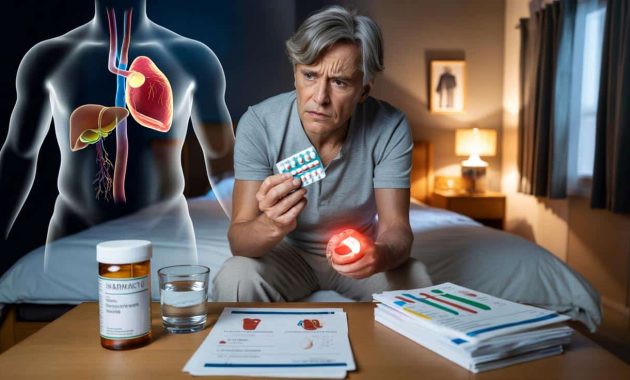
For millions of people, a tiny statin tablet at night is the main barrier between them and a heart attack or stroke. The drugs are considered safe and highly effective, but health authorities – including the NHS in the UK – are increasingly keen to remind patients that certain symptoms should never be ignored.
What statins actually do in your body
Statins block an enzyme in the liver that helps make cholesterol. Less production means lower “bad” LDL cholesterol circulating in your blood, which reduces the risk of fatty deposits building up in your arteries.
Doctors usually prescribe a daily dose, often of atorvastatin or simvastatin, based on your cardiovascular risk and your current cholesterol levels. Lifestyle changes such as diet, physical activity and weight loss remain the first-line approach. Statins are typically added when those steps are not enough, or when your risk of heart disease or stroke is already high.
Statins are preventive drugs: you take them when you feel well today to reduce the chance of a life‑threatening event tomorrow.
In the UK, NICE guidance often aims to keep non‑HDL cholesterol below about 2.5 mmol/L in high‑risk patients. Doses can be adjusted every few weeks until the target is reached, balancing benefit with side effects.
Serious side effects: the red flag symptoms
Most people on statins never experience major problems. Some notice mild headaches, nausea or digestive upset, which usually settle. A small group, though, can develop more dangerous reactions that need urgent medical review.
Muscle pain that feels “wrong”
Occasional aches after the gym are normal. Statin‑related muscle issues feel different. The NHS advises seeking medical help quickly if you notice:
- Unusual, persistent muscle pain or tenderness not linked to exercise
- Marked muscle weakness, such as struggling to climb stairs or lift normal objects
Doctors worry about a rare condition called rhabdomyolysis. In this scenario, damaged muscle breaks down and releases substances into the bloodstream that can overwhelm the kidneys.
Severe muscle pain or weakness on statins is not something to “see how it goes” – it needs rapid medical assessment.
➡️ “At 68, I feared losing independence”: the daily routine that reassured me
➡️ Valentine’s Day: Here’s the ideal hair styling tool for a dream blowout
Yellow skin, dark urine or intense abdominal pain
Because statins act on the liver, they can occasionally irritate or injure liver cells. Most changes are mild and only show up on blood tests. A few warning signs are more dramatic:
- Yellowing of the skin or whites of the eyes (jaundice)
- Dark, tea‑coloured urine
- Pale stools
- Severe or persistent pain in the upper abdomen
These symptoms may suggest liver inflammation or, more rarely, pancreatitis (inflammation of the pancreas), both of which require urgent medical care.
Persistent cough and breathlessness
Another red flag list from the NHS includes:
- A cough that does not go away
- Unexplained breathlessness
- Unintentional weight loss
In very rare cases, statins have been linked to interstitial lung disease, where lung tissue becomes inflamed and stiff. The symptoms can be subtle at first and easy to blame on age, smoking or long Covid, so doctors usually review the full picture before deciding the cause.
Any new, persistent breathing problem while on a long‑term drug should be mentioned to a clinician, even if it seems minor.
Common, milder effects that still deserve attention
Alongside these serious but rare events, many people report milder problems early in treatment. Typical complaints include:
- Headaches
- Mild nausea
- Stomach discomfort or loose stools
- Sleep disturbances or vivid dreams
These often fade after a few weeks. If they linger or affect your daily life, doctors can adjust the dose, switch to another statin, or occasionally suggest a different cholesterol‑lowering drug such as ezetimibe.
How doctors monitor statin treatment
Ongoing monitoring helps catch problems early and check that the tablets are actually doing their job.
Lipid checks and dose adjustments
A cholesterol blood test is usually done around 8–12 weeks after starting therapy. If the numbers have not dropped enough, your doctor may raise the dose or move you to a more potent statin.
Follow‑up blood tests are not box‑ticking exercises; they show whether your risk of a heart attack is genuinely coming down.
Further tests are often repeated a few months after any dose change, then at regular intervals once your levels are stable.
Muscle and liver monitoring
For muscle problems, monitoring is mainly based on how you feel. Blood tests for muscle enzymes (commonly called CPK or CK) are usually reserved for people with:
- New muscle pain or weakness
- Moderate to severe kidney disease
- Untreated thyroid problems
- A personal or family history of muscle disease
- Heavy alcohol use
- Age over 70, especially with other risk factors
If CK levels rise to more than five times the upper limit of normal, doctors tend to stop the statin, particularly if the test is not done straight after intense exercise, which can temporarily elevate CK.
Liver function tests are usually checked before starting, again a couple of months later, and then periodically. If a liver enzyme such as ALT (alanine aminotransferase) climbs above three times the normal range, clinicians reassess the dose or consider switching therapies.
Why you should never stop statins on your own
Stories about muscle pain and liver problems can understandably scare people. Some patients simply stop their tablets as soon as they feel off colour. That decision can quietly raise their future risk of heart attack and stroke.
Stopping statins without medical advice can be more dangerous than many of the side effects people fear.
Doctors can often find a compromise: a lower dose, a different molecule, or a combination with another drug. The aim is to keep you protected from cardiovascular disease while minimising side effects you actually feel.
Statins in real life: typical scenarios
| Scenario | Possible medical response |
|---|---|
| New, mild muscle aches after starting a statin | Review symptoms, consider blood tests; may watch and wait, lower dose or change statin if symptoms persist |
| Sharp rise in liver enzymes on a routine test | Temporarily stop or reduce dose; repeat tests in a few weeks; check for other causes such as alcohol or viral hepatitis |
| No cholesterol improvement after three months | Increase dose, review adherence and diet, or switch to a stronger statin |
| Severe muscle pain, dark urine and weakness | Emergency evaluation for rhabdomyolysis; immediate drug withdrawal and kidney monitoring |
Key terms patients often ask about
Two blood test acronyms come up frequently in statin conversations: CK and ALT.
CK (creatine kinase) is an enzyme released when muscles are damaged. A mild rise can follow heavy exercise. A major spike, especially with symptoms, alerts doctors to potential rhabdomyolysis.
ALT (alanine aminotransferase) is made by liver cells. Elevated ALT suggests irritation or injury in the liver, from medication, alcohol, viruses or fatty liver disease. Doctors compare how high it is and how quickly it changes before blaming a statin.
How to lower your risk of side effects
People often underestimate how much their own habits can interact with statins. A few simple strategies can make treatment smoother:
- Limit heavy drinking, which stresses the liver and muscles
- Tell your doctor about all medicines and supplements, especially grapefruit products, certain antibiotics and antifungals
- Report new symptoms early instead of waiting months
- Keep a simple diary if you suspect a side effect, noting when you take your pill and when symptoms appear
For many, statins are a long‑term commitment rather than a quick course. Approaching them as a partnership with your doctor – and knowing the warning signs to watch – helps you gain the heart‑protective benefits while staying alert to the rare complications that need fast medical attention.
Originally posted 2026-03-10 19:46:53.